
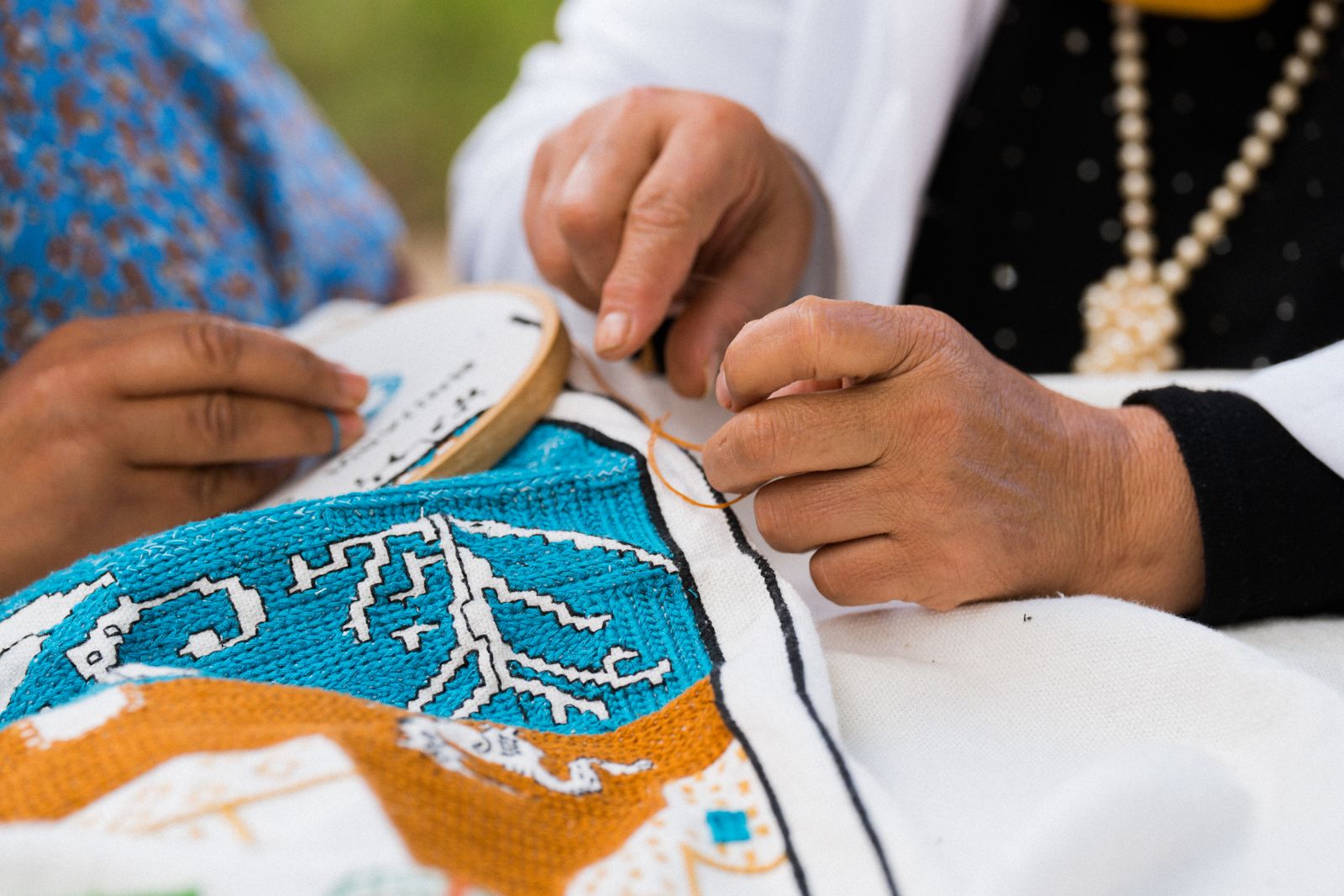
Treat embellishment approval as a controlled production decision, not an aesthetic comment. The record should identify exactly what was reviewed, what characteristics were accepted, what remains conditional and which next step the approval releases.
A screen image can confirm artwork direction, but it cannot prove thread texture, bead weight, adhesive behaviour, backing, fabric distortion or the appearance of a finished inside surface. Those points need a physical trial made on the intended or representative base material.
What should an embellishment approval sample prove?
Start with the approved artwork and placement reference, then connect them to real materials and construction. An embroidery sample approval should record the artwork revision, scale, colours, stitch or fill direction, base fabric, backing, placement dimensions and approved face and reverse appearance. For handwork, identify the bead, sequin, stone or component rather than relying on a colour name alone.
The physical sample should also answer a construction question: can this surface be produced without unacceptable puckering, stiffness, snag risk, seam interference or discomfort against the body? If the embellishment crosses a dart, seam, edge or opening, the trial should show how that transition is handled.
| Technique | Approve on the physical trial | Watch during production |
|---|---|---|
| Machine embroidery | Thread and colour, density, backing, scale, placement, face and reverse | Puckering, broken or loose threads, registration, edge finish and fabric distortion |
| Hotfix rhinestones | Stone identity, layout, adhesive route, heat compatibility and finished hand | Missing, shifted or poorly bonded stones, heat marks and contamination |
| Beading and handwork | Component identity, thread, knotting or anchoring, spacing, weight and inside protection | Loose components, sharp ends, inconsistent rows, snag points and local strain |
| Foil or surface print | Artwork, colour, coverage, surface effect, cure route and fabric compatibility | Cracking, incomplete transfer, off-register areas, marks and unwanted adhesion |
How do embroidery, rhinestones and beading change the checks?
Each technique creates a different failure path. Embroidery joins thread, backing and base fabric through repeated needle penetration. Hotfix decoration depends on the component, adhesive and controlled heat. Beading adds individual attachment points, local weight and possible contact with lining or skin. A review form should therefore name the relevant construction rather than use one line marked “decoration approved.”
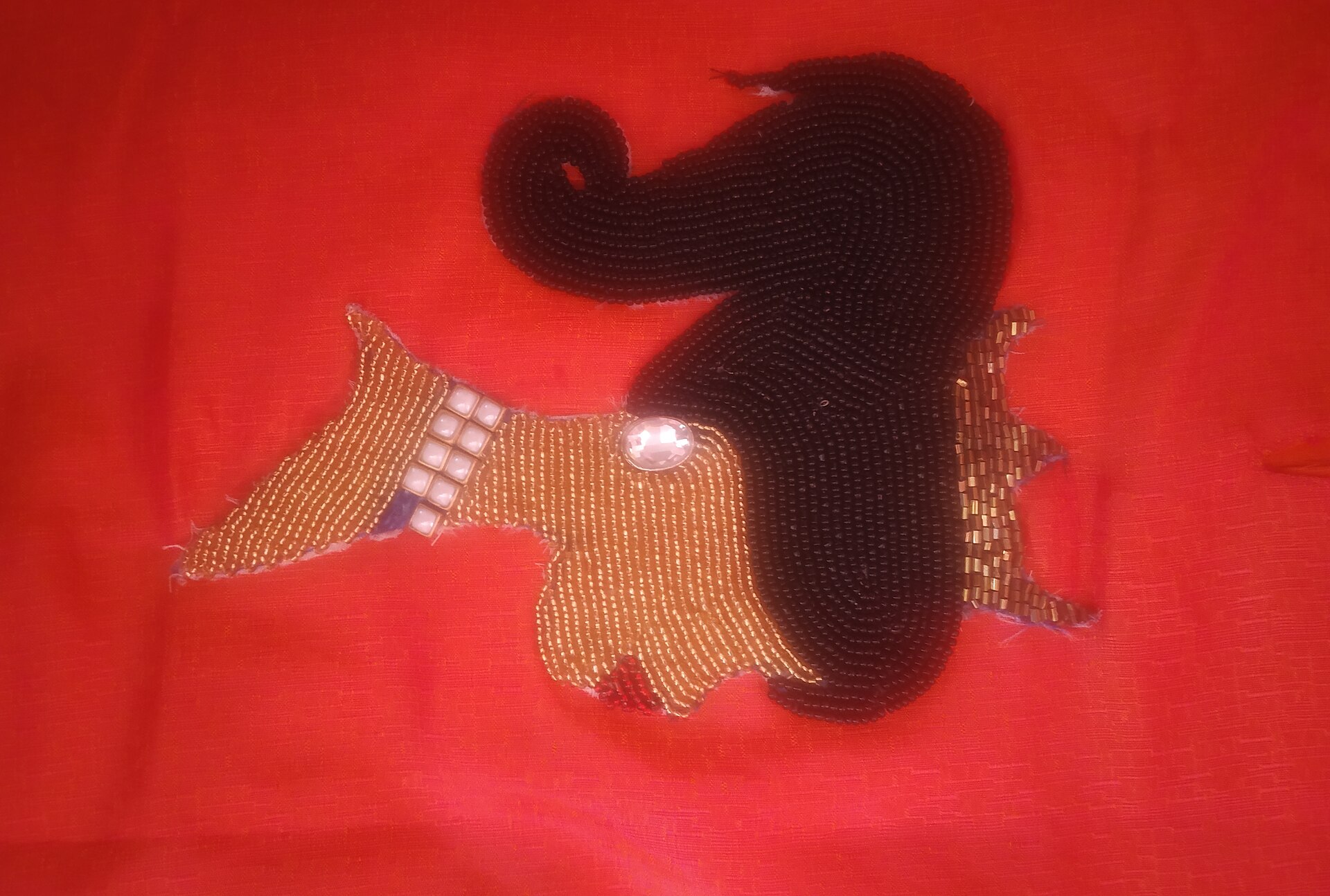
For beaded dress quality, look beyond the face of the garment. Check how threads start and finish, whether cut ends or knots are protected, whether the lining prevents abrasion, and whether concentrated weight pulls the shell or seam. Compare appearance while the garment is supported and while it moves; a flat table can conceal drag or imbalance.
A 2025 technical article from the China National Garment Association describes garment quality as a combination of checks during processing, when correction remains possible, and final inspection. It also notes that inspection requirements vary with the garment category. That principle is directly useful here: inspect technique-specific workmanship early rather than waiting for a finished-garment audit to reveal a repeated problem.
Which durability tests belong in the approval plan?
Build embellishment durability testing around foreseeable use and the proposed care instruction. A wash route, dry-cleaning route, rubbing check, attachment assessment or wear trial answers a particular question; none should be added only because it appears on a generic checklist.
The US Federal Trade Commission care-labelling guidance says manufacturers and importers need a reasonable basis for care instructions and should consider the complete garment. Its examples include bead damage during dry cleaning and explain that evidence for separate components may be insufficient when their combination could react differently. For an embellished style, confirm the shell, lining, attachment material, decoration and finishing route together.
ISO 6330:2021 defines domestic washing and drying procedures for textile testing. ISO 105-X12:2016 covers textile colour fastness to rubbing with dry or wet cloth. These standards define procedures, not a universal acceptance level, and a rubbing result does not prove that beads or stones are securely attached. Record the method, sample condition, number of cycles or actions where applicable, observed result and agreed acceptance requirement.
What should be checked during bulk embellishment?
Keep an approved reference where the work is made and define who can accept variation or stop the process. Check first output before volume accumulates, then use a recorded inspection rhythm appropriate to the style, technique and order risk. The reference should remain protected and identifiable rather than circulate without a style, colourway or revision.
- Identity: style, colourway, artwork revision, component and material lot where relevant.
- Placement: position, orientation, scale, symmetry and relationship to seams, darts, openings and cut edges.
- Workmanship: density, registration, spacing, thread control, anchoring, edge quality and reverse-side finish.
- Fabric response: puckering, stretching, scorching, shine, staining, stiffness or local distortion.
- Garment interaction: lining contact, support, drape, movement, seam clearance and comfort.
- Disposition: accepted, repairable, held or rejected work, with the defect and decision recorded.
When a component, base fabric, colour, machine programme, adhesive or subcontract route changes, identify whether the approved trial still represents production. Reapproval is cheaper than discovering after assembly that a visual match concealed a different attachment or care outcome.
How does PIPK handle embellishment approvals?
As of 14 September 2026, PIPK's current workflow can coordinate embroidery, foil, hotfix rhinestones, beading and other handwork according to the style brief and confirmed production route. The development team reviews artwork, placement, material compatibility, attachment, handling and intended care on a strike-off, panel or workmanship sample before the relevant bulk step is released.
The approved trial becomes a production reference alongside the style documents. Inspection priorities are set for the actual technique and garment construction, including visible execution, attachment, fabric response and interaction with lining or support. Exact testing, tolerance, order quantity and timing are confirmed for the project; they are not presented as universal PIPK or industry figures.
Buyer release checklist
What should be written before bulk work begins?
- Style code, colourway, garment panel and artwork revision
- Approved physical sample type, date, approver and retained-reference location
- Thread, bead, stone, sequin, foil or other component identity and approved colour
- Base fabric, backing, adhesive, attachment thread and inside protection where applicable
- Placement dimensions, scale, orientation, repeat and relationship to construction lines
- Approved face, reverse, edge, density, spacing, hand and garment drape
- Care route, test method, sample condition, result and project-specific acceptance requirement
- Bulk checkpoints, decision owner, repair rule and reapproval triggers
Connect the embellishment record to the PIPK embellishment capability, the sample-development workflow and the garment quality-control plan. For heavily decorated occasionwear, also review the evening-dress development questions before approving the full construction.
Useful garment embellishment quality control links the approved appearance to materials, attachment, care and a named production reference. Send PIPK the style artwork, base fabric, decoration direction, target market and intended care route so the team can review a suitable development and approval path before bulk application.
Further reading
Sources
The sources below support the inspection and test-method principles used in this guide. They do not establish one commercial pass level for every embellished garment.
China National Garment Association: garment sewing quality and in-process inspection (23 July 2025) US Federal Trade Commission: Clothes Captioning—Complying with the Care Labeling Rule ISO 6330:2021: domestic washing and drying procedures for textile testing ISO 105-X12:2016: colour fastness to rubbing