
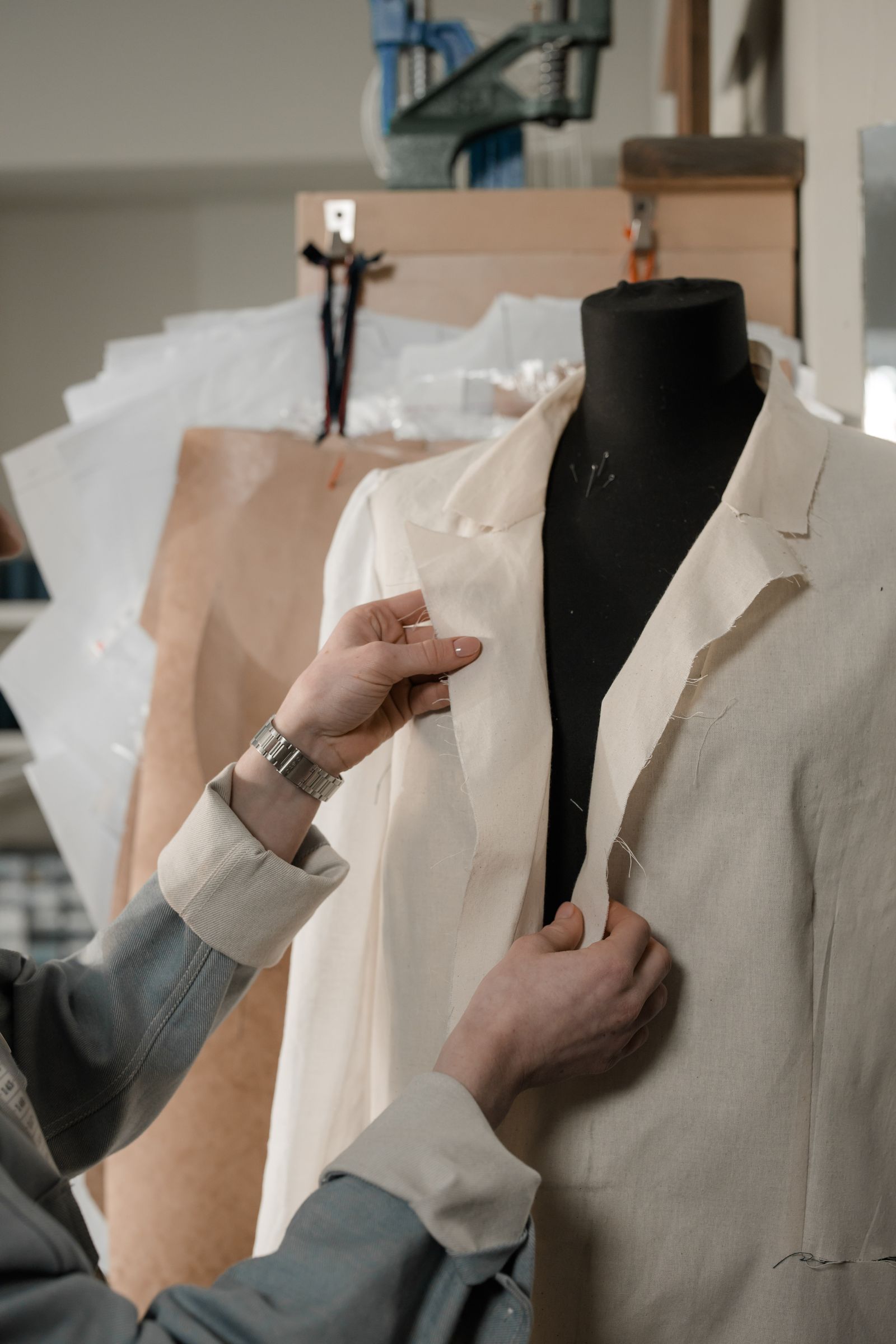
Interlining is hidden inside a tailored jacket, but its decisions appear on the outside. It can support the front, lapel, collar, pockets, hems or other areas, while a poor material pairing or uncontrolled process can change drape, create shine, show adhesive through the face or lose adhesion after care.
What does fusible interlining do in a blazer?
Fusible interlining is a support material joined to the shell with a heat-activated adhesive. In tailored jacket construction, the selected support can help stabilise an edge, control stretch, hold a shape or add body. It does not replace the pattern, sewing, pressing or fitting work that creates the complete silhouette.
The buyer should therefore approve an internal-construction description, not only a clean exterior photograph. Identify the interlining supplier reference or specification, adhesive side, weight or construction, colour, intended garment area and whether the build also uses sew-in canvas, stay tape, shoulder support or another reinforcement.
A 24 October 2024 China National Garment Association report on the 2024 China Occupational Wear Industry Conference describes an industry presentation titled “The skeleton of clothing: the importance and future trends of interlining.” That conference summary supports the structural relevance of interlining; it does not establish one construction, material or process setting for every blazer.
Which blazer areas should the placement map identify?
Mark the actual jacket pieces and zones to be supported. A useful map can distinguish fronts, lapels, collars, facings, pocket openings, vents, hems, sleeve heads and small reinforcement points. State whether each piece is fully or partly fused and show the edge, grain and seam-allowance relationship where it affects assembly.
Do not infer the map from the garment category alone. A fluid blazer, fitted jacket and sharply tailored coat may need different support. Shell structure, stretch, surface and intended care route affect the choice. Preserve the approved build in a bill of materials or construction sheet so a later substitution is visible.
How should a factory match the interlining to the shell fabric?
Begin with a representative cutting of the actual shell, not a generic fabric of similar colour. Compare candidate interlinings for support, recovery, hand, drape, colour and adhesive compatibility. Review the face under useful light and at an angle for resin strike-through, glazing, colour change, texture flattening, seam or edge show-through and a visible boundary between fused and unfused areas.
Fuse a piece large enough to form the intended panel, then sew and press the lapel, front edge, collar or pocket area. A small bonded strip can screen adhesion, but it cannot prove lapel roll, balance, movement or finished-jacket appearance.
Keep the chosen shell and interlining as one approved combination. If the shell lot, finish, coating, interlining, adhesive or supplier reference changes, decide whether the existing trial remains applicable.
What should the fusing trial record?
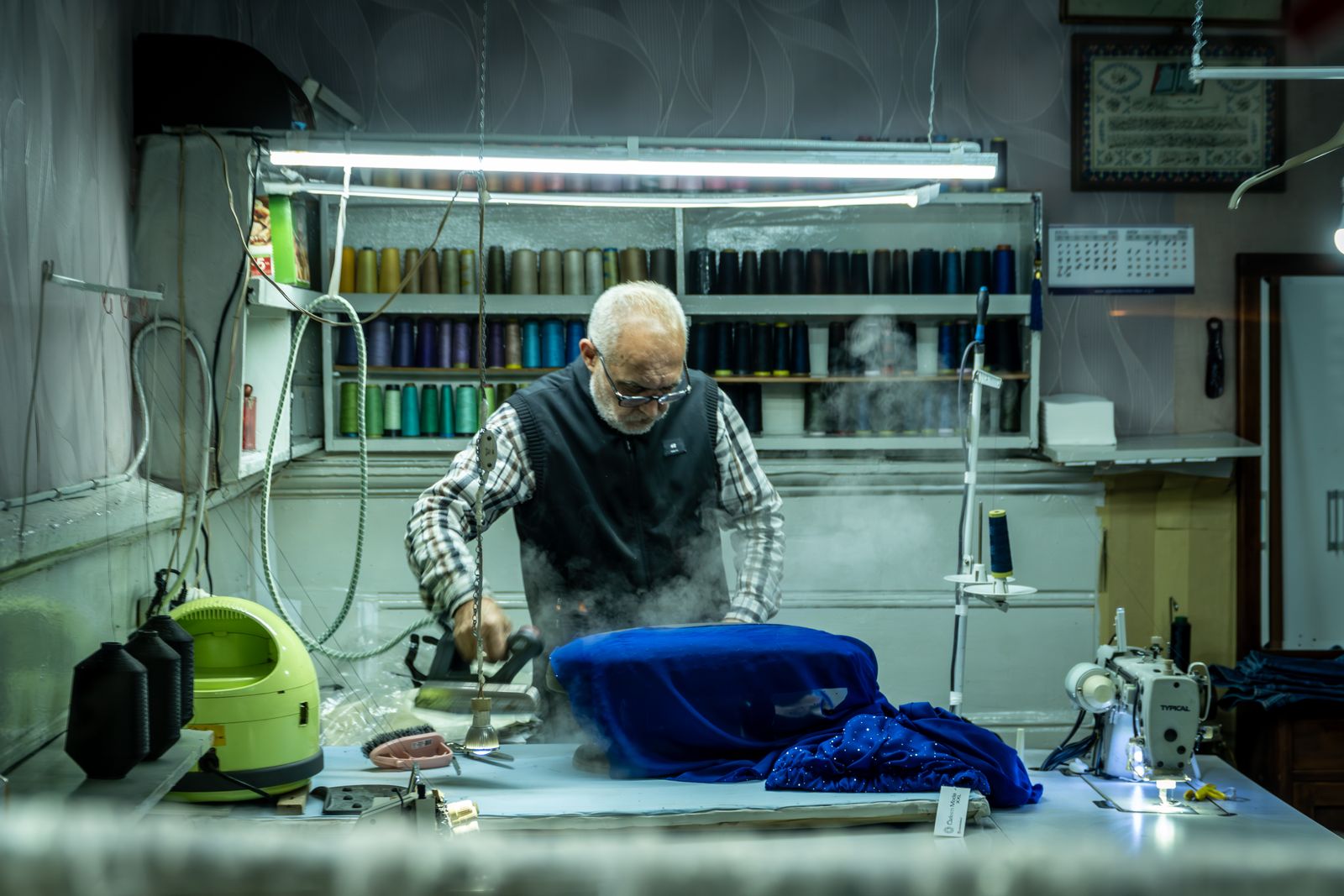
Record the shell and interlining identities, specimen direction, machine, set temperature, measured working conditions where available, pressure, dwell time, feed speed if relevant, cooling or resting method and trial date. Note which face contacted the equipment and whether a protective sheet or other process material was used.
Check the fused composite after cooling for adhesion, hand, dimensions and face appearance, then repeat the review after the proposed sewing, pressing and care sequence. Record handling that could affect stabilisation.
There is no useful universal setting to copy. Adhesive, shell, finish, moisture, equipment and construction can change the process. A supplier recommendation is a starting point; the factory still needs evidence from the actual pairing and machine.
How can buyers check bubbling, strike-through and stiffness?
Review the jacket at the same stages a customer will see it: hanging, worn, moving and after the proposed care test. Look across broad front panels under side light for local bubbles, ripples, orange-peel texture, delamination, edge ridges, shine, colour change and adhesive points visible on the face. Compare left and right lapels, fronts and collar for roll and symmetry.
Use touch as well as sight. Compare fused and unfused areas for an abrupt change in hand, boardiness or noise. Bend and roll the panel to see whether the shell and support move together. On light-coloured or open fabrics, inspect the reverse and face for adhesive strike-through. On stretch or fluid shells, confirm that the support has not removed movement needed by the design.
Translate observations into approval language: identify the inspected areas, lighting, care state and retained reference. Photograph any accepted concession so it does not become an unlimited standard.
Which test evidence helps with interlining bond strength approval?
ASTM D2724-19(2025)e1 covers procedures for characterising the bond strength of bonded, fused and laminated apparel fabrics before or after laundering and drycleaning. ASTM describes the method as suitable for acceptance testing of commercial shipments of bonded and laminated apparel fabrics. The standard provides a method; the buyer and supplier still need a project-specific specimen plan, care exposure and acceptance criterion.
ISO 9866-2:1991, reviewed and confirmed by ISO in 2025, specifies a method for dimensional change when fabrics are exposed to dry heat under low pressure. Its scope is intended to help predict fabric behaviour in garment-making processes such as fusing. It does not set one allowable dimensional-change limit for all jacket fabrics.
| Approval evidence | Question it can answer | Important boundary |
|---|---|---|
| Shell-and-interlining trial | Does this pairing give the intended hand and visible surface? | A small swatch does not prove the complete jacket |
| Recorded fusing conditions | Can production repeat the approved process on the named equipment? | Set values should not be copied to another pairing without review |
| ASTM D2724 bond test | How is bond strength characterised before or after specified care? | The method does not supply the order's acceptance limit |
| ISO 9866-2 dry-heat method | How does the fabric change dimension under the defined dry-heat exposure? | The result is not a universal garment tolerance |
| Finished blazer sample | Do structure, lapel roll, balance, movement and appearance work together? | Approval applies to the recorded materials and construction |
Should blazer sample approval include the care route?
Yes. Adhesion and appearance can change after laundering, drycleaning, drying, steaming or pressing, so the test sequence should match the proposed label and market. Review the bonded area and the whole jacket: shell, interlining, lining, shoulder support, thread, trims and decoration may interact during care.
For garments sold in the United States, the Federal Trade Commission Care Labeling Rule requires manufacturers and importers to have a reasonable basis for care information before sale. The rule allows reliable evidence for component parts only together with reliable evidence for the garment as a whole. A successful interlining swatch test therefore does not, by itself, establish the finished blazer's care instruction.
If a care test changes the surface, bond, dimensions, lining relationship or jacket shape, record the result against the approved sample and measurement sheet. Decide whether the material pairing, construction, care instruction or acceptance criterion needs revision before bulk production.
How does PIPK scope a tailored-jacket interlining review?
As of 21 October 2026, PIPK's published tailoring development workflow asks buyers to review pattern balance, sleeve pitch, lapel and collar shape, support layers, lining behaviour, pressing and movement together. The same page calls for the approved sample to identify the chosen internal construction, including fusible interfacing, partial or half-canvas construction, stay tape or shoulder support where applicable.
PIPK can connect the shell, silhouette, support direction, sample comments and care requirements to a defined trial and approval record. Exact materials, construction, fusing conditions, tests, criteria, quantity, price and timing are current project-specific terms confirmed for the actual style.
Blazer sample approval checklist
What should the buyer approve before bulk production?
- Shell fabric and interlining supplier references, specifications, colour and physical swatches
- Placement map showing fused, canvas, taped and otherwise reinforced areas
- Intended silhouette, support level, hand, drape and movement reference
- Recorded trial equipment, temperature, pressure, time, speed and cooling route as applicable
- Face appearance checks for strike-through, shine, texture change, ridges and colour change
- Bond and dimensional evidence under the specified method and agreed acceptance criteria
- Finished-sample checks for balance, lapel roll, collar, lining, pockets, hems and movement
- Proposed care instruction, whole-garment evidence and approval responsibility
- Written change rule for any shell, interlining, adhesive, lot, equipment or process substitution
Use the garment sample approval process to separate fit and production decisions. The fabric approval guide connects the retained material reference to cutting, while the garment quality-control workflow carries the approved construction into early production checks.
Reliable fusible interlining for blazers comes from an approved material pairing, placement map, repeatable trial and whole-garment evidence—not from one generic fusing recipe. Send PIPK the jacket reference, shell fabric, desired structure, care route and approval requirements for a project-specific review.
Further reading
Sources
These sources support the interlining context, bond-test scope, dry-heat dimensional method and care-evidence boundary above. They do not establish one universal interlining, process setting, peel-strength limit, garment tolerance or PIPK commercial term.
China National Garment Association: 2024 China Occupational Wear Industry Conference, 24 October 2024 ASTM D2724-19(2025)e1: bond strength of bonded, fused and laminated apparel fabrics ISO 9866-2:1991: dimensional change of fabrics exposed to dry heat under low pressure, confirmed 2025 US Federal Trade Commission: Care Labeling Rule, 16 CFR Part 423